Anglo-Zanzibar War
Shortest war in recorded history, 1896
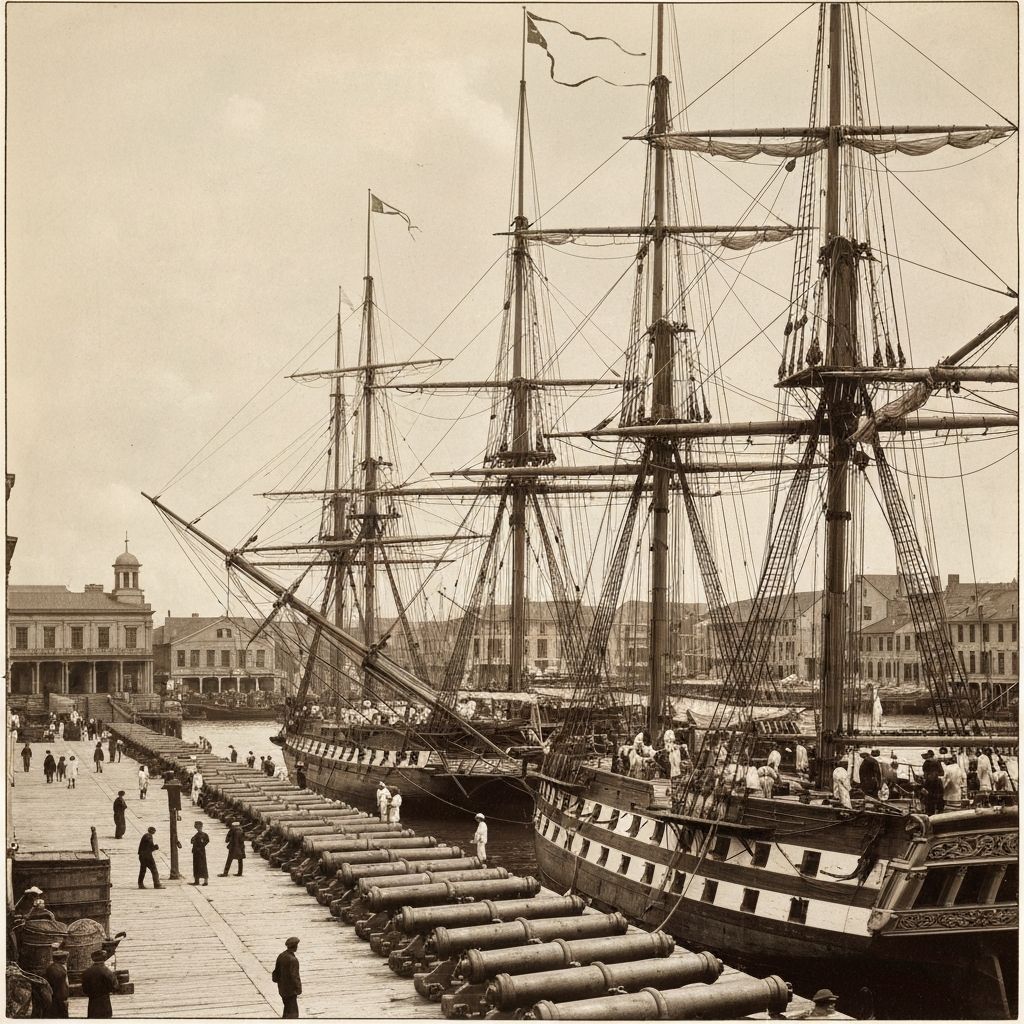
The Anglo-Zanzibar War was a military conflict fought between the United Kingdom and the Sultanate of Zanzibar on 27 August 1896. The war is noted for being the shortest in recorded history, lasting between 38 and 45 minutes. The conflict arose when the pro-British Sultan Hamad bin Thuwaini died and was succeeded without British approval by Sultan Khalid bin Barghash.
The Anglo-Zanzibar War was a military conflict fought between the United Kingdom and the Sultanate of Zanzibar on 27 August 1896. The war is noted for being the shortest in recorded history, lasting between 38 and 45 minutes. The conflict arose when the pro-British Sultan Hamad bin Thuwaini died and was succeeded without British approval by Sultan Khalid bin Barghash.
1Background
In the late nineteenth century, Zanzibar was a semi-autonomous sultanate under British protectorate status, bound by the Anglo-Zanzibar Treaty of 1886. The island occupied a strategically vital position on the East African coast and was the hub of the regional ivory and clove trade — as well as, historically, the slave trade.
The British Empire maintained considerable influence over the succession of Zanzibari sultans and had cultivated a succession of cooperative rulers who deferred to British interests. The sudden death of Sultan Hamad bin Thuwaini on 25 August 1896 triggered a succession crisis that would culminate in the briefest war in modern history.
2Prelude to war
Within hours of Hamad's death, his cousin Khalid bin Barghash seized the palace and declared himself sultan without obtaining prior British consent — a requirement under the terms of the protectorate agreement. The British consul-general, Basil Cave, immediately demanded that Khalid stand down and recognise British-preferred candidate Hamud bin Mohammed.
Khalid refused and began fortifying the palace, assembling a force of approximately 2,800 soldiers, palace guards, and armed civilians. He also raised the Zanzibari flag on the royal yacht HHS Glasgow and positioned it in the harbour alongside several smaller vessels.
The British, meanwhile, positioned five warships in the harbour — HMS Philomel, HMS Thrush, HMS Sparrow, HMS Racoon, and HMS St George — and issued an ultimatum: Khalid was to stand down by 9:00 a.m. on 27 August or face bombardment. As the deadline passed without compliance, British forces opened fire.
3The conflict
At 9:02 a.m. on 27 August 1896, British warships opened fire on the palace. The HHS Glasgow — which Khalid had hoped to use as a naval weapon — was sunk within minutes by shellfire, and the palace's wooden structure caught fire rapidly under the naval bombardment.
Zanzibar's defenders returned fire with the palace's artillery pieces and small arms, managing to wound one British sailor — the sole British casualty of the engagement. By 9:40 a.m., Khalid had fled to the German consulate, seeking asylum, and the Zanzibari flag over the palace had been shot down. The conflict lasted approximately 38 to 45 minutes in total.
British and Indian troops then landed to secure the palace grounds. The fire was extinguished and the extent of the damage assessed. Roughly 500 Zanzibari defenders were killed or wounded — primarily palace guards and military personnel who had followed Khalid's orders to resist.
4Aftermath
The British installed their preferred candidate, Hamud bin Mohammed, as sultan. He proved a cooperative ruler and, at British urging, issued a decree abolishing the legal status of slavery in Zanzibar in 1897 — one of the last territories in the world to do so.
Khalid bin Barghash remained in the German consulate for several years before being exiled to German East Africa (present-day Tanzania). He was eventually captured by British forces during the First World War and exiled to Saint Helena — the same island where Napoleon had died — before later being permitted to return to East Africa.
The war is today primarily remembered as a historical curiosity — the shortest armed conflict in recorded history. Its legacy also touches on broader themes of European colonialism, the scramble for Africa, and the coercive diplomacy employed by imperial powers to maintain political control over protectorate territories.
References
+ 24 more references